Hangzhou Lingqi Technology Co., Ltd. is a provider of intelligent communication products and Internet of Things platform service. It is a national high-tech enterprise and a small and medium-sized technology enterprise in Zhejiang Province. It has been certified by ISO9001, ISO24001 and ISO45001 sys
Hangzhou Lingqi Technology Co., Ltd. is a provider of intelligent communication products and Internet of Things platform service. It is a national high-tech enterprise and a small and medium-sized technology enterprise in Zhejiang Province. It has been certified by ISO9001, ISO24001 and ISO45001 sys
Hangzhou Lingqi Technology Co., Ltd. is a provider of intelligent communication products and Internet of Things platform service. It is a national high-tech enterprise and a small and medium-sized technology enterprise in Zhejiang Province. It has been certified by ISO9001, ISO24001 and ISO45001 sys
Hangzhou Lingqi Technology Co., Ltd. is a provider of intelligent communication products and Internet of Things platform service. It is a national high-tech enterprise and a small and medium-sized technology enterprise in Zhejiang Province. It has been certified by ISO9001, ISO24001 and ISO45001 sys
Hangzhou Lingqi Technology Co., Ltd. is a provider of intelligent communication products and Internet of Things platform service. It is a national high-tech enterprise and a small and medium-sized technology enterprise in Zhejiang Province. It has been certified by ISO9001, ISO24001 and ISO45001 sys
National Energy Administration to promote new energy power generation projects should and do - leading Qi technology to undertake a full set of new energy power station grid-connected data dispatching
Author:杭州領(lǐng)祺科技有限公司Date:2022-12-23Reading:
The National Energy Administration of China's Power Grid recently issued the Notice on Actively Promoting the Integration of New energy power generation Projects, which proposed that all power grid enterprises should take effective measures for wind power and photovoltaic power generation projects that meet grid connection conditions in accordance with the principle of "integration of efforts, integration of efforts and early integration" on the premise of ensuring the safety and stability of the power grid and orderly power supply. Ensure timely grid connection.
It is reported that wind power and photovoltaic power generation projects with grid-connected conditions are allowed to be grid-connected in batches, and the completion of full capacity is not a necessary condition for new energy projects to be grid-connected. In addition, the circular requires to increase the construction of supporting grid connection projects, with wind power and photovoltaic power generation projects to do a good job, and strive to synchronously completed and put into operation.
Since the beginning of this year, the domestic new energy power generation has continued to grow rapidly and maintained a high level of utilization. In the fourth quarter, the new energy production was concentrated and connected to the grid. Ensuring that new energy power generation projects are connected to the grid in time is conducive to increasing the supply of clean electricity and bringing into play the kurtosis of new energy. The role of supply protection during this period is also conducive to promoting clean and low-carbon energy transformation and helping to achieve the goal of peak carbon neutrality. (Reporter Liao Ruiling)
New energy
Grid-connected principle: Meet the local load first, and connect the remaining power to the grid. Local generation, local consumption, avoiding transmission losses (5%).
Power station power consumption calculation and power consumption calculation are the key to grid-connected design: power generation curve and local load demand curve should be matched as far as possible, so as to minimize the fluctuation of grid-connected input and reduce the pressure on the absorption capacity of the grid.
Incorporation voltage as low as possible, as low as possible to access the voltage, the second selected voltage, and then increase the high voltage.
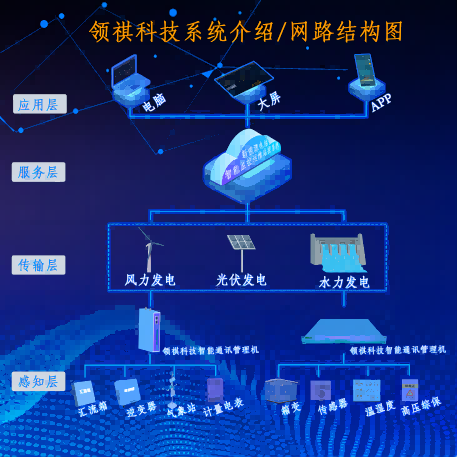
Intelligent power measurement, remote communication, four remote and five defense communication are the key of networking. Hangzhou Lingqi Technology intelligent communication gateway is used in thousands of grid-connected photovoltaic power stations across the country, data acquisition communication and security communication, has accumulated a wealth of experience cases, willing to share with peers.
Junction point refers to the outlet of distributed energy power station.
The photovoltaic power station has a booster station, and the connecting point is the busbar or node on the middle voltage side of the booster station.
The photovoltaic power station has no booster station, and the parallel network is the output summary point of the distributed power supply.
An access point is an entry point for the grid to access a distributed energy power station, including dedicated line access and T access.
The grid can be a public grid or a consumer grid. For the BIPV system of a large public building, it is necessary to consider the actual situation of the existing power facilities and power load of the building. Try to meet the local load, the rest of the grid. Minimize the fluctuation of incoming network.
Special line access refers to the photovoltaic power station access point set up special switching equipment, such as access substation or switch station; T connection mode refers to the mode that the distributed power access point is not configured with dedicated devices, for example, the photovoltaic power station directly connects to the overhead or cable line.
For medium-sized photovoltaic power generation systems, one centralized connecting point (busbar - user power distribution room) is usually selected, but for large photovoltaic power generation systems, more than two connecting points can be selected according to the actual needs, in order to improve the reliability of system operation.
On the premise of ensuring the safe operation of the power grid and distributed photovoltaic, the installed capacity of distributed photovoltaic power generation project and the long-term planned installed capacity and other factors are taken into account to reasonably determine the voltage level and access point.
The photovoltaic grid-connected power generation system can be connected to the power grid in two ways: low voltage access and medium voltage access. The level of grid-connected voltage should be determined according to the conditions of the power network through technical and economic comparison demonstration. If both the lower and middle voltages are available, the lower voltage level is preferred.
1. Low-voltage power grid access
The low-voltage grid-connected system usually consists of 3 to 5 components in series, and the DC voltage is less than 120V. The advantage of this method is that each series of solar cell modules less series, strong tolerance to the sun shadow; The disadvantage is that the DC side current is larger, in the design need to choose a large section of DC cable. The grid-connected system is connected to the three-phase 400V or single-phase 230V low-voltage distribution network, which supplies power to local loads through AC distribution lines. The remaining power is fed into the public grid. According to whether it is allowed to generate electricity back to the public grid, the system can be divided into countercurrent grid-connected system and non-countercurrent grid-connected system.
(1) Countercurrent grid-connected system. The generating power cannot exceed 30% of the capacity of the distribution transformer, and a bidirectional meter that can be measured is required.
② no countercurrent grid-connected system. There are generally two solutions:
The reverse power detection device is installed to communicate with the inverter. When the reverse flow is detected, the inverter automatically controls the power generation, realizing the maximum utilization of grid-connected power generation without the occurrence of reverse flow.
Two-way inverter + battery (PCS energy converter, energy conversion system) is adopted to realize the dispatching grid-connected power generation system. The solar array is charged by a bidirectional inverter and connected to the grid to generate electricity. The grid-connected power is adjusted by the measurement and control device according to the actual power of the local load. When the illumination energy is insufficient, the energy can be provided by the battery.
2. Medium voltage power grid access
Medium voltage grid-connected system is usually used in the system with high rated power of solar array. The number of solar cell modules in series is large, and the DC voltage is relatively high. The disadvantage of this method is that it has relatively small tolerance to the solar shadow. Advantages are high voltage, low current, the use of cable diameter is smaller, and the inverter better match, so that the inverter conversion efficiency is higher. At present, the medium voltage system is used in the large scale photovoltaic power generation system.
The grid-connected system is connected to the 10kV or 35kV medium voltage grid through the booster transformer. The booster grid-connected system should adopt a separate on-grid transformer to transmit power to the superior grid.
The medium voltage grid-connected power generation system should be designed by the power supply department. The high and low voltage switchgear should be equipped with switch protection, metering and lightning protection devices. The actual grid-connected power generation should be measured at the medium voltage side.
High voltage grid access
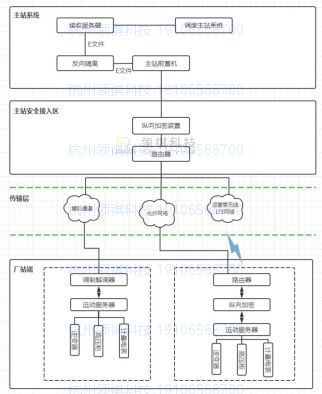
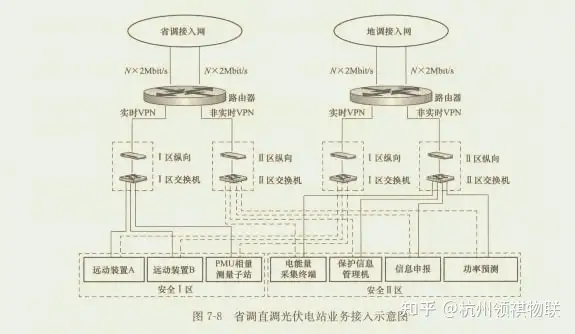
The dispatching data network is based on the power communication transmission network and adopts the technical system of IPover SDH to realize the interconnection and interworking of the dispatching data network. The dispatching data network is physically isolated from the management information network, MPLS/VPN is deployed on the whole network, and all related services are connected to the corresponding VPN according to the principle of "security partition".
Scheduling data network composition
The dispatching data network is composed of two levels of network, that is, the backbone network is composed of state modulation, network modulation, provincial modulation and ground regulation points, and the corresponding access network is composed of direct dispatching stations at all levels. Each access network should be connected to the dual plane of the backbone network through two points respectively
In the backbone network and access network, the network is generally divided into core layer, convergence layer and access layer according to the scale of the network. The core layer is the intersection center of network services. Usually, the core layer only completes the function of data exchange. The aggregation layer is located between the core layer and the access layer and is used to gather and distribute services. The access layer mainly connects user services to the network for quality assurance and access control.
The dispatching data network configuration and service access mode of the PV power station are similar to that of the provincial PV power station; Two sets of dispatching data network devices are configured for the ground-regulated photovoltaic power station, which are connected to the ground-regulated human network. The service access mode is similar to that of the provincial direct-regulated photovoltaic power station.
The scheduling data network operates and manages according to the principle of "unified scheduling and hierarchical management". The dispatching data network equipment deployed in the photovoltaic power station shall be connected to the corresponding dispatching data network and access network management system, which shall be managed by the corresponding dispatching organization.
Features of photovoltaic grid-connected networking scheme of Trumpchi intelligent communication Gateway:
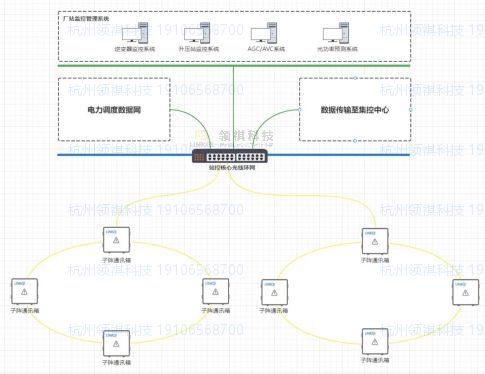
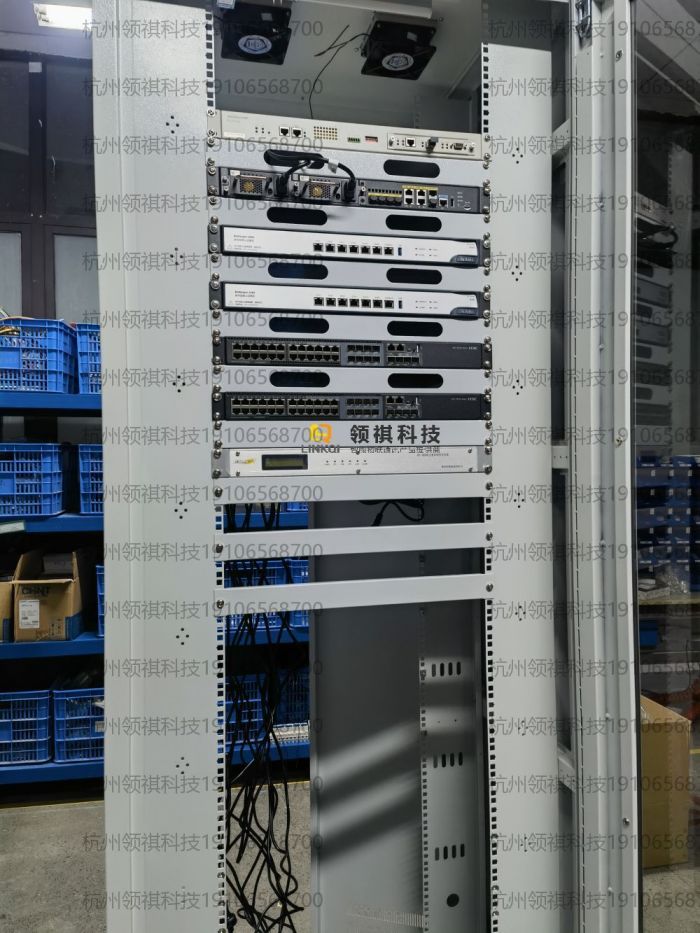
1. The core networking equipment, Hangzhou Lingqi intelligent communication gateway, has the advantages of remote deployment, remote maintenance, multi-point delivery, flexible protocol, friendly project interface, fast project construction cycle, simple management, stability and reliability.
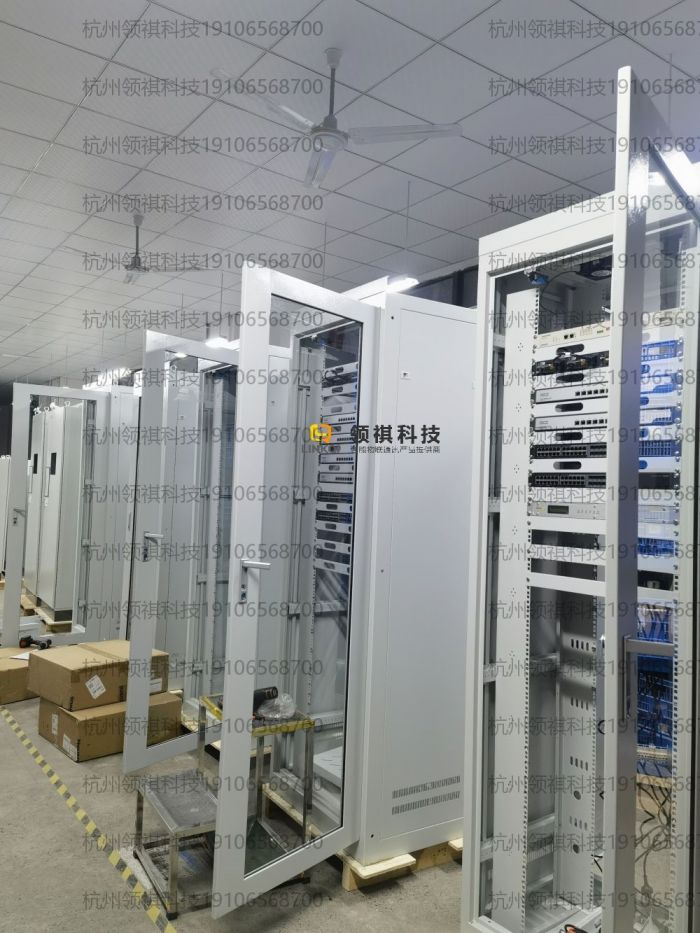
The communication management computer system is integrated into the box. Box change scheme has low construction cost, small area and beautiful appearance. Field installation only need to do box positioning, cable connection between boxes, outlet cable connection and other debugging work, from installation to operation time is short, greatly shorten the project construction cycle.
2. Simple scheme and high power generation income
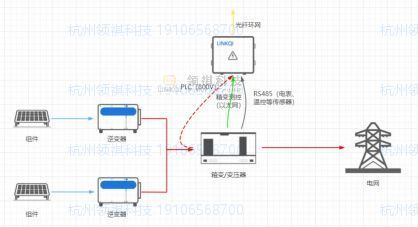
In the solution of 10KV and 35KV photovoltaic grid-connected system, the medium energy photovoltaic inverter can be used as a single stage conversion, and the inverter is connected to the isolation booster transformer (270v/10kv or 270v/35kv) directly into the power grid, without the need for low-voltage isolation transformer.
Simple scheme, high power generation income: reduce low voltage isolation transformer link, accelerate project construction progress, improve system reliability. At the same time, hundreds of thousands of transformer procurement costs per MW are reduced. High power generation income, for the photovoltaic inverter using low-voltage isolation transformer, the power generation efficiency of the system is reduced by 2%~3%. Based on the calculation of 1MW photovoltaic system, 80% of power generation is carried for 4 hours per day and the average loss of low-voltage isolation transformer is 2%, the medium energy photovoltaic system solution can generate 23,000 KWH more power per year, and the system life of 25 years can generate 467,000 KWH more power.
3. Supply chain integration and out-of-the-box projects; abundant landing projects connected to various environments and accumulated experience
Intelligent surge protection junction box, DC surge protection distribution cabinet, inverter system, AC surge protection distribution cabinet, transformer, system distribution and box change, etc., the construction of a photovoltaic power station, need a huge supply chain integration work. Relying on the rich experience and resources of electrical system program integration and supply chain integration, Hangzhou Linkqi technology communication management machine supports the power E file standard, supports the IEC61850 protocol, is compatible with various inverter components, horizontal partition equipment, high and low voltage switchboard, and has been connected with a variety of power monitoring systems and power dispatching systems in the project practice. The implementation of the project is convenient and rapid.
4. Flexible way of cooperation: there are cloud background of equipment and grid-connected monitoring system, which can provide only equipment or background and monitoring. WEB configuration of monitoring system is flexible and customized. It can monitor the daily energy yield, monthly energy yield, power generation curve, system machine running status information, sunshine amount, wind speed and other environmental information.






 0086-18958100293