Micro inverters generally refer to the inverters whose Power is less than or equal to 1000 watts in the photovoltaic power generation system and have the module level MPPT(Maximum Power Point Tracking) function, which are all called micro photovoltaic grid-connected inverters. According to the number of components connected to the micro inverter is different: the current product is mainly divided into a towing one, a towing two, a towing four, a towing six and a towing eight. "Micro" is relative to the traditional centralized and cluster inverter. The traditional photovoltaic inverter is to connect all the DC generated by all photovoltaic cells under sunlight in series and parallel, and then use an inverter to convert DC into AC and connect to the power grid. Microinverters invert each component or a small group (such as 2 to 8 components). Its advantage is that each component can be independent MPPT control, can greatly improve the overall efficiency, but also can avoid the centralized inverter some DC high voltage, low light effect, wooden barrel effect, etc., has the characteristics of safety, efficiency and flexibility.
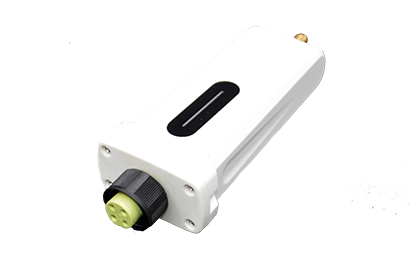
Micro inverter advantage
1, the photovoltaic panel of the micro inverter has a strong ability to resist local shadow, so each photovoltaic panel can work near the maximum power point;
2, can improve the reliability of the system from 5 years to 20 years, the high reliability of the system is mainly by optimizing the heat dissipation to remove the risk, and the damage of a photovoltaic panel does not affect other groups;
3, more convenient installation, increase capacity super fast. Photovoltaic micro inverter can be placed in a variety of angles and directions, is a convenient configuration of distributed installation, and can make full use of space; There is no need to build a special power distribution room, microinverters can be installed directly behind the components or on the support. Because it is a parallel structure, it can be installed directly after increasing the scale, without changing the previous configuration;
4, the photovoltaic panel in the traditional photovoltaic system will affect the efficiency because of the installation Angle and local shadow, but also there will be power mismatch and other defects, photovoltaic micro inverter can adapt to the constant change of the external environment, can avoid these problems;
5. The conversion efficiency of photovoltaic panel in photovoltaic micro-inverter will not be affected because a single photovoltaic panel is shaded or a single micro-inverter is damaged, which can also improve the photoelectric conversion efficiency of the whole system;
6. In the traditional centralized photovoltaic inverter, the voltage on the DC line between the photovoltaic panel and the inverter is higher, reaching 600V/800V, while in the system equipped with micro inverter, the output voltage to the power grid side is only 220V, which not only eliminates the safety concerns in the building high voltage line, but also reduces the power loss.
7. Be smarter. Systems equipped with microinverters allow for component-level monitoring, where the performance of each component can be seen in the Energy Communication Unit (ECU).
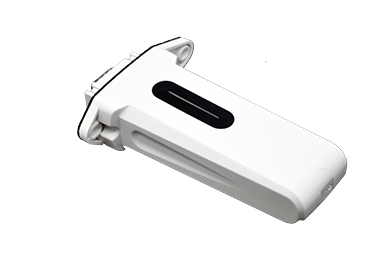
Micro inverter communication mode
At present, there are two communication modes of photovoltaic micro-inverters, one is to use wired local cable connection communication, the other is wireless communication method (ZigBee technology). Local cable is the use of existing power lines for communication, as long as there is a wire, can transfer data, cost savings, and easy to use, plug and play, connected to the power to connect to the network. However, the local cable communication has the problem of instability, electromagnetic wave generated by household appliances interferes with the communication, and some unpredictable errors often occur, and there will be signal attenuation problem, which may make the micro inverter due to communication delay or communication error lead to low efficiency and even damage the micro inverter, and then lead to the micro inverter can not work.
China Photovoltaic Industry Association has approved the release of 10 series of standards for household photovoltaic grid-connected power generation system of China Photovoltaic Industry Association. The standard names and standard numbers are as follows:
"Household photovoltaic grid-connected power generation system -- Part 1: Site investigation and Installation site Evaluation" T/CPIA 0011.1-2019
"Household photovoltaic grid-connected power generation system -- Part 2-1: General Requirements for Design Specifications" T/CPIA 0011.201-2019
"Household photovoltaic grid-connected power generation system -- Part 2-2: Design Specification Square Design" T/CPIA 0011.202-2019
"Household photovoltaic grid-connected power generation system -- Part 2-3: Design Specification Structure Design" T/CPIA 0011.203-2019
"Grid-connected photovoltaic power generation systems for household use -- Part 2-4: Design Specification for Electrical Safety Design" T/CPIA 0011.204-2019
"Household photovoltaic grid-connected power generation system -- Part 2-5: Design Specification System Access Design" T/CPIA 0011.205-2019
"Household photovoltaic grid-connected power generation system - Part 3: Installation and commissioning specifications" T/CPIA 0011.3-2019
"Photovoltaic grid-connected power generation System for household use -- Part 4: Acceptance Specifications" T/CPIA 0011.4-2019
"Grid-connected photovoltaic power generation systems for household use - Part 5: Code for Operation and Maintenance" T/CPIA 0011.5-2019
"Household photovoltaic grid-connected power generation systems -- Part 6: Generation Performance Evaluation methods" T/CPIA 0011.6-2019
The above standards came into effect on March 15, 2019.






 0086-18958100293